
Foundation Oxidation on Indian Skin: Why Makeup Turns Dark and How Artists Can Prevent It
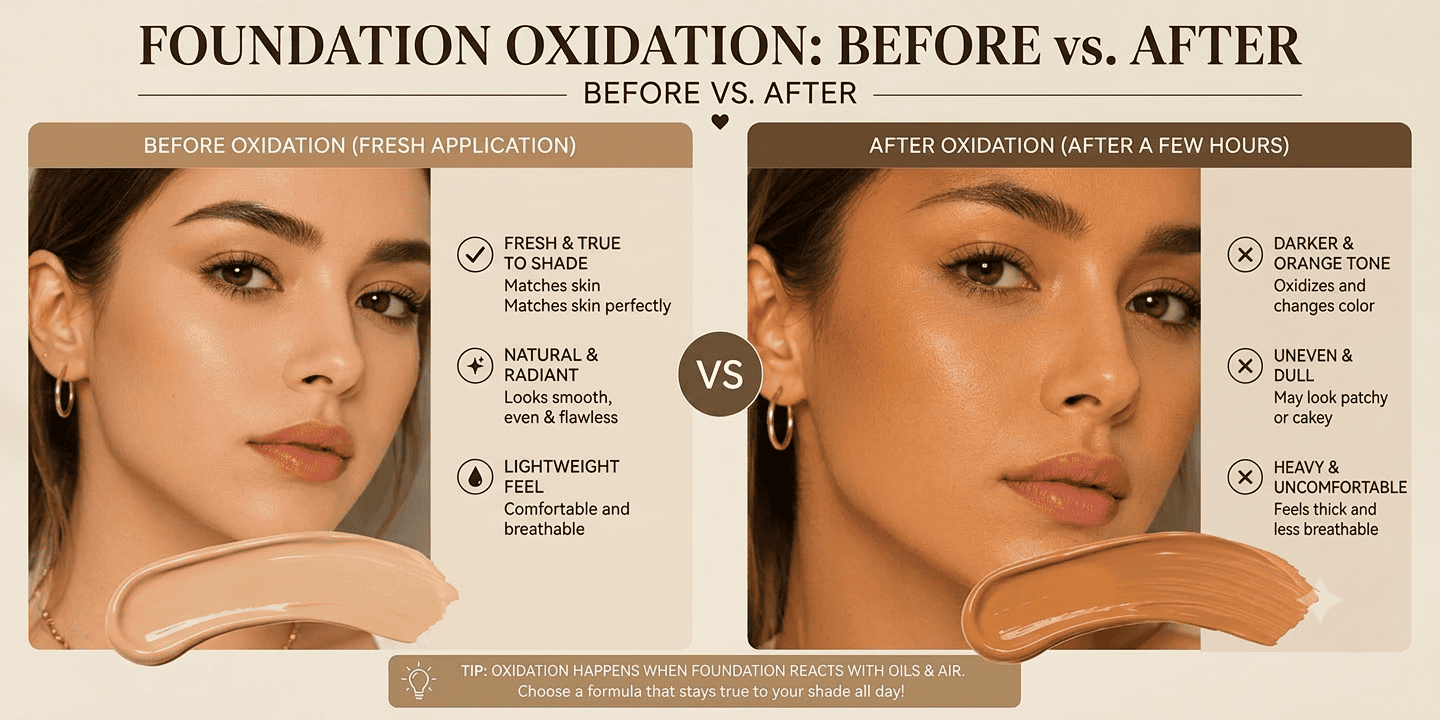
Learn what causes foundation to turn darker and how professional makeup artists can achieve a balanced, natural-looking finish.
Foundation can look flawless immediately after application but appear darker or more orange after a few minutes. This change is commonly called foundation oxidation. Understanding why foundation changes colour helps makeup artists create a natural finish across different Indian skin tones.
What Causes Foundation to Turn Dark?
Foundation may look different as its formula interacts with skin oils, sweat and the surrounding environment. However, not every colour change is oxidation. An incorrect undertone, a shade mismatch or a formula that does not suit the skin can also make the complexion appear darker or more orange.
Indian skin tones include a wide range of undertones, including warm, cool, neutral and olive. Choosing foundation only by the colour visible in the bottle or on the back of the hand can lead to a mismatch between the face, jawline and neck.
How Makeup Artists Can Prevent Foundation Oxidation
1. Prepare the Skin Properly
Start with clean skin and apply a moisturiser suited to the person’s skin type. Allow skincare products to settle before applying primer and foundation. Using too many skincare or makeup layers may affect how products sit on the skin and can contribute to an uneven finish.
2. Test the Correct Foundation Shade
Apply a few suitable shades along the jawline and compare them with both the face and neck. Check the result in natural daylight as well as the lighting where the makeup will be worn. Daylight can reveal undertone and shade differences that may be less noticeable under studio lights.
3. Allow the Formula to Set
Give the foundation a few minutes to settle before making a final shade decision. Check whether the colour changes as it dries and blends with the skin. This simple step can help artists avoid selecting a shade that looks right at first but becomes too dark later.
4. Choose Products for the Skin Type
Oily, dry and combination skin can respond differently to makeup products. Choose a formula and preparation routine suited to the individual, and avoid applying unnecessary layers. Blotting excess oil when needed and using compatible products can help maintain a more even finish.
Why Professional Training Matters
Understanding colour theory, undertones, skin preparation and foundation application helps makeup artists make informed product choices instead of relying on guesswork. Practical training also gives learners opportunities to work with different skin tones, textures and lighting conditions.
At Deepthi Makeup Academy, aspiring artists can explore professional makeup training and develop practical techniques. Learn more about the available makeup courses and training options in Hyderabad.
For general skincare guidance, consult the American Academy of Dermatology’s skincare routine advice.
Frequently Asked Questions
Why does my foundation turn orange after application?
This can happen because of a shade or undertone mismatch, changes as the formula dries, or interactions with skin oils. Test the shade on the jawline and check it again after a few minutes.
How can I choose foundation for Indian skin?
Consider the person’s depth of skin tone and undertone, then test suitable shades along the jawline. Compare the face and neck in natural light before choosing.
Does foundation always oxidise?
No. Some formulas show little or no noticeable colour change. A darker appearance can also come from an unsuitable shade, undertone or product combination.
Want to Improve Your Professional Makeup Skills?
Build your understanding of shade matching, skin preparation and professional makeup techniques with guidance from Deepthi Makeup Academy.
Contact Deepthi Makeup Academy to ask about makeup training in Hyderabad.